Laboratory of BioInorganic Chemistry

| Research |
| People |
| Facilities |
| PhotoGallery |
| Links |
 Home
Home
Molecular recognition of DNA by porphyrin derivatives.
- Key words:
water-soluble porphyrins, intercalation, molecular recognition, DNA scission.
- Objectives:
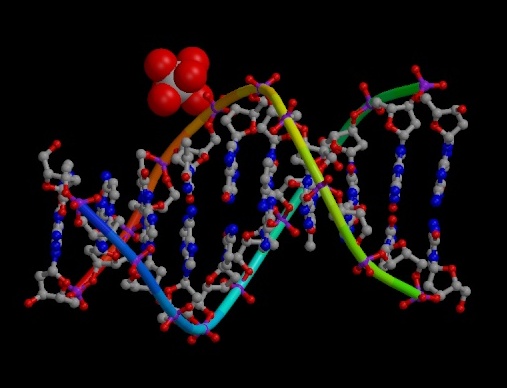
Obtain molecules able to inhibit the viral gene expression or ontogenesis, with the synthesis of ligands able to interact with DNA by various ways:
- Specifically bind on gene fragments implied in the replication or the transcription of DNA of virus or tumor cells,
- Induce the DNA scission to the site of fixing.
- Ligands:
Hybrid molecules made up which contain an intercalating entity
of cationic porphyrin, and a hydroxamic acid reasonable to induce hydrolytic cuts of the DNA in the presence of lanthanides.
- Strategy:
- Design by molecular modeling the molecule ready to recognize the targeted sequence.
- Synthesize the molecule.
- Determine the mode of interaction ligand-oligonucleotide target by
physicochemical and biochemical methods.
- Study the specificity of recognition ligand-oligonucleotide target.
- Study the nuclease activity of the ligands.
- Evaluate their biological activities (cytotoxicity, antiviral activity, antitumor activity) (collaboration).
- Immobilize on electrodes of cation metalloporphyrins in order to electrochemically study their interactions with the oligonucleotides and to use them like biosensors of DNA (collaboration).
